

A Guide from Dr. Karima Daniel at Daniel Dental Studio in Norwalk, CT
When patients visit us at Daniel Dental Studio in Norwalk, CT, one of the most common questions we hear is: “What should I do about a missing tooth?”
Many people think replacing a missing tooth is mostly about appearance. And while restoring your smile is certainly important, the truth is that missing teeth affect much more than how your smile looks. Tooth loss can have a significant impact on your jawbone health, your ability to chew comfortably, and even the long-term structure of your face.
At our practice, Dr. Karima Daniel often explains that one of the biggest reasons we recommend dental implants is because they do something other tooth replacement options cannot: they help preserve the bone that supports your teeth.
If you’ve recently lost a tooth—or have been living with a missing tooth for years—this guide will help you understand why bone health matters and how dental implants can restore both your smile and your oral health.
What Happens to the Jawbone When a Tooth Is Missing?
Many patients are surprised to learn that tooth loss affects the jawbone itself. Teeth are not just structures that help you chew or smile—they also play an important role in keeping the bone underneath them healthy and strong.
The Role of Tooth Roots in Bone Health
Each natural tooth has a root that extends down into the jawbone. When you bite or chew, pressure travels through that root and into the surrounding bone.
This stimulation sends a signal to your body that the bone is still needed. As a result, the body continues maintaining the bone’s density and structure.
Why Bone Begins to Shrink After Tooth Loss
When a tooth is lost, that stimulation disappears. Without a tooth root to transfer chewing forces into the jawbone, the body begins to think the bone in that area is no longer necessary.
Over time, the bone begins to shrink in a process called bone resorption.
We often explain it to patients using a simple analogy:
If a muscle isn’t used, it gradually gets smaller and weaker. Bone behaves in a very similar way. When it is no longer being stimulated, it slowly begins to deteriorate.
The Consequences of Bone Loss
Jawbone shrinkage doesn’t happen overnight, but over months and years it can lead to several issues:
- Changes in the shape of the jaw and facial structure
- A sunken or prematurely aged appearance
- Shifting of neighboring teeth
- Difficulty placing future dental restorations
- Reduced stability for dentures or bridges
For this reason, replacing a missing tooth sooner rather than later can help preserve long-term oral health.
Dental Implants: A Solution That Mimics Natural Teeth
At Daniel Dental Studio, one of the treatments we frequently recommend for missing teeth is a dental implant.
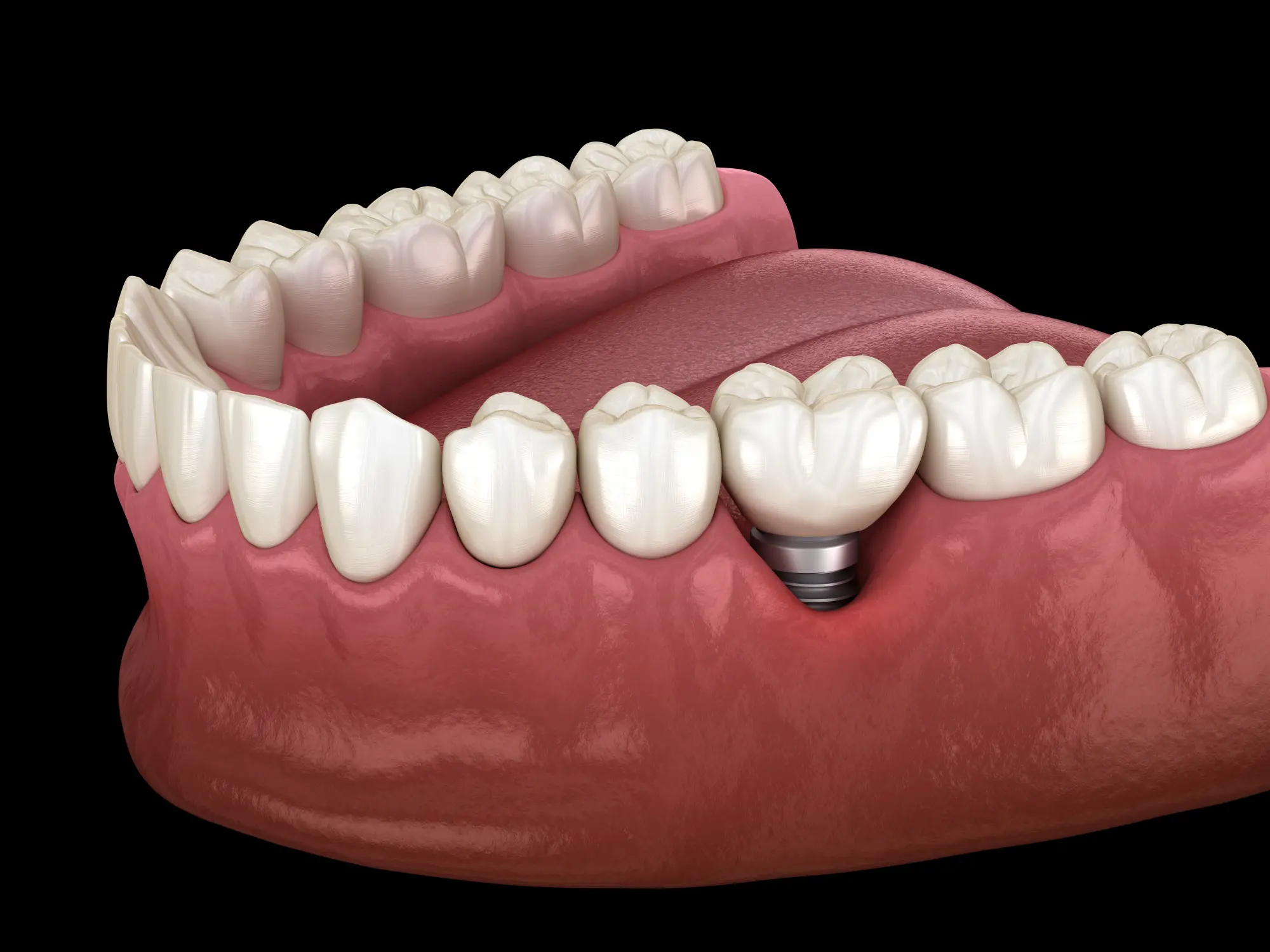
Dental implants are unique because they are designed to replace both the visible tooth and the root beneath it—making them the closest thing we currently have to restoring a natural tooth.
What Is a Dental Implant?
A dental implant is a small medical-grade titanium post that is placed into the jawbone. Once healed, it serves as a stable foundation for a replacement tooth.
Because the implant sits in the bone where the natural root once existed, it can help restore both function and bone stimulation.
The Two Main Parts of an Implant
When patients hear the term “implant,” they often picture the visible tooth. But a complete dental implant actually has two main components.
The Implant Post (Root Replacement)
The implant post is the portion placed into the jawbone. This is the part that functions like a natural tooth root.
Once placed, the bone gradually integrates with the implant through a process called osseointegration, creating a strong and stable connection.
The Dental Crown (Visible Tooth)
After healing is complete, a custom-made dental crown is attached to the implant.
This crown is carefully designed to match the size, shape, and color of your surrounding teeth so that it blends seamlessly with your smile.
Why Dental Implants Are Different
Dental implants stand apart from other tooth replacement options because they:
- Replace both the tooth and the root
- Help stimulate and preserve jawbone
- Provide excellent stability and function
- Feel and look like natural teeth
For many patients, implants offer a long-term solution that restores both confidence and comfort.
How Dental Implants Help Maintain Jawbone Health
One of the biggest advantages of dental implants is their ability to maintain bone health.
Bone Stimulation Through Chewing
When you chew with a dental implant, pressure travels through the implant and into the jawbone—just like it would with a natural tooth.
This stimulation signals the body to maintain the surrounding bone tissue.
Preventing Bone Deterioration
Because implants restore this natural stimulation, they can help slow or prevent bone loss in the area where a tooth was missing.
This preservation of bone can help maintain:
- Jaw structure
- Facial support
- Overall oral stability
Restoring Everyday Function
In addition to protecting bone health, implants also restore the everyday functions we rely on our teeth for.
Patients are able to:
- Eat comfortably
- Chew efficiently
- Speak clearly
- Smile confidently
Many of our patients at Daniel Dental Studio tell us that once their implant is complete, it feels just like having their natural tooth back.
What If Bone Loss Has Already Occurred?
One concern we often hear from patients is:
“I’ve been missing this tooth for years—is it too late for an implant?”
The good news is that modern dentistry has advanced significantly, and in many cases implants are still possible—even if some bone loss has occurred.
Advances in Modern Dentistry
With today’s technology, we have more tools than ever to help rebuild or work around areas where bone has diminished.
Every patient is different, which is why a thorough evaluation is essential.
Bone Grafting Procedures
In cases where bone has been lost, we may recommend a bone graft.
A bone graft helps rebuild the jawbone by adding material that encourages the body to generate new bone tissue.
Over time, this can create a stable foundation for implant placement.
Advanced Implant Options
Advancements in implant dentistry have also introduced additional solutions for complex cases, including:
- Mini dental implants
- Advanced implant designs
- Zygomatic implants for significant bone loss
These options allow oral surgeons and implant specialists to address a wide range of situations.
At Daniel Dental Studio in Norwalk, we carefully evaluate each patient’s unique anatomy and goals before recommending the most appropriate treatment plan.
The Dental Implant Process: What Patients Can Expect
Another common concern we hear is that the dental implant process feels intimidating or complicated.
While implant treatment does take time, our team works closely with patients throughout the entire journey so they always know what to expect.
Step 1: Consultation and Evaluation
Your implant journey begins with a comprehensive exam.
During this appointment, Dr. Karima Daniel will:
- Examine your teeth and gums
- Review digital imaging
- Evaluate bone health
- Discuss your goals and treatment options
This step helps us determine whether dental implants are the best solution for your smile.
Step 2: Implant Placement
If implants are right for you, the next step is placing the implant post in the jawbone.
This procedure is typically performed with precision planning to ensure proper positioning and long-term stability.
Step 3: Healing and Osseointegration
After the implant is placed, the jawbone begins to fuse with it during a process called osseointegration.
This healing phase generally takes a few months and is crucial to the implant’s long-term success.
Step 4: Final Restoration
Once healing is complete, we place the custom dental crown on top of the implant.
At this point, the implant looks and functions like a natural tooth.
Why the Healing Period Is Important
Patients sometimes wonder why dental implants require a healing period before the final crown is placed.
The answer lies in long-term success.
Osseointegration: The Key to Stability
During healing, the bone grows around the implant surface and locks it firmly in place.
This creates a stable foundation capable of supporting everyday chewing forces.
Why We Don’t Rush the Process
At Daniel Dental Studio, we believe in doing things the right way—not the fastest way.
Allowing the implant to integrate fully helps ensure:
- Strong support for the final crown
- Long-term durability
- Reduced risk of complications
Our goal is always to create a solution that lasts for many years, if not decades.
Supporting Patients Every Step of the Way
We understand that dental treatment can feel overwhelming, especially when it involves multiple steps.
That’s why one of our priorities at Daniel Dental Studio in Norwalk, CT is making sure our patients feel supported throughout the entire process.
Ongoing Communication
During your implant journey, our team stays connected with you.
We schedule follow-up visits and often check in with patients to see how healing is progressing.
Education at Every Stage
We take the time to explain each step so that you always know:
- What’s happening next
- How your healing is progressing
- What to expect moving forward
Personalized Care
Our goal is to ensure that every patient feels seen, heard, and cared for—not like just another appointment on the schedule.
Implant treatment is a journey, and we walk through it with you.
Long-Term Benefits of Dental Implants
Dental implants offer many advantages beyond simply replacing a missing tooth.
Natural Function
Implants restore your ability to bite and chew comfortably.
You can enjoy your favorite foods again without worrying about slipping dentures or unstable restorations.
Natural Appearance
Because each crown is custom-designed, implants blend seamlessly with your surrounding teeth.
Most people won’t even realize you’ve had dental work done.
Durability
With proper care and routine dental visits, implants can last for many years.
For many patients, they become a long-term solution that supports both oral health and confidence.
Confidence in Your Smile
Perhaps most importantly, dental implants allow patients to smile, speak, and eat without worrying about missing teeth.
Restoring Your Smile in Norwalk
Tooth loss affects more than appearance—it affects the health of your jawbone and the function of your smile.
Dental implants are unique because they replace both the tooth and its root, helping to preserve bone, restore strength, and maintain facial structure.
At Daniel Dental Studio in Norwalk, CT, Dr. Karima Daniel and our team are dedicated to helping patients understand their options and feel confident in their treatment decisions.
If you’re missing a tooth or considering dental implants, we invite you to schedule a consultation so we can evaluate your smile and discuss the best path forward.
Call Daniel Dental Studio today at (203) 803-1645 to schedule your consultation.
Together, we can restore your smile and help protect your oral health for years to come.
.avif)